
Your photographs are not finished when the roll is exposed: travelling with film
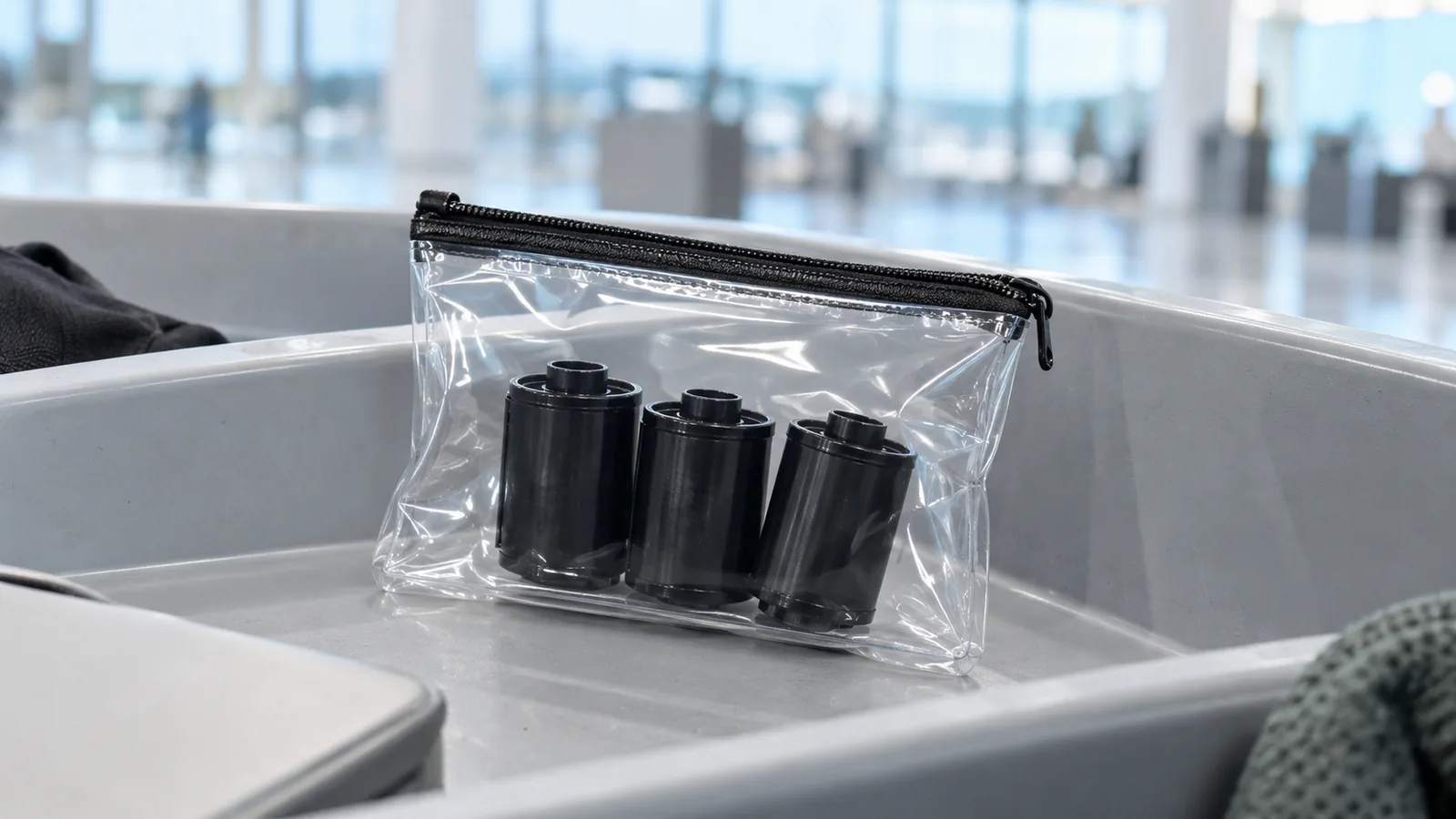
A roll of film changes status during a trip. It begins as material waiting for photographs, becomes a record of moments you cannot repeat, and eventually returns as negatives or slides you can examine. The important transition is not simply whether you have pressed the shutter. Exposed film that has not been processed still needs care, including when it reaches an airport checkpoint.
That can be easy to overlook on the way home. Before departure, the rolls are equipment. After several days, the same small canisters contain the reason you brought a camera. A plan concerned only with getting them to the destination leaves the more valuable half of the journey unresolved. The return, connections and any additional security screening belong in the original preparation.
Film manufacturers publish advice about scanning and handling, but their technical advice is not a promise about an airport’s procedure. A traveller needs both: an understanding of the material and current information from the relevant airport or security authority. This article describes that distinction and a way to plan around it. It does not report an airport test, guarantee a hand inspection or recommend bypassing security requirements.
Exposed and processed mean different things
Kodak Alaris’ storage and care guidance, dated October 2019, distinguishes unprocessed photographic material from processed film. Its warning about X-rays concerns unprocessed film, including film already exposed in a camera. Finishing the roll does not make its images immune to the concern described in that guidance.
For a traveller, this changes how rolls should be identified. A mark indicating exposed can help you avoid loading the same roll twice, but it should not be interpreted as meaning safe for any treatment. It describes one stage of your photographic work. Processing is a different stage and requires its own arrangement with a suitable lab or established workflow.
In a hypothetical weekend trip, someone uses three rolls and carries another two unused. The used rolls may feel like completed work because no more photographs will be added. Yet the person still needs to get them to processing. Treating the two groups as different shooting states is useful; treating one group as finished photographic objects is premature.
This is a reason to make a simple inventory before travelling. Identify how many rolls you carry, which are loaded and which are exposed. Keep the record understandable to anyone helping you with the equipment. A clear inventory cannot protect film from a scanner, but it can stop the most important material from disappearing into an unexplained pocket or a bag packed by somebody else.
Cabin baggage is not a universal answer to CT scanning
ILFORD’s airport advice warns that newer CT-type cabin scanners are a concern for its film products irrespective of ISO rating and recommends asking for hand inspection. It separately advises against putting film in checked baggage. These are the manufacturer’s recommendations, not evidence that every checkpoint has the same equipment or accepts the same procedure.
The distinction matters because a familiar rule about taking film in cabin baggage may omit the type of screening. Repeating the advice without its context can create confidence at the wrong moment. The question is not only where the bag travels on the aircraft, but how the photographic material will be examined along the route.
Do not infer the scanner’s type from a casual visual guess or assume that a previous trip describes the current checkpoint. If the distinction matters to your film plan, ask the airport or relevant security authority through its official information channel before travelling. Explain that you are carrying undeveloped photographic film and ask about the applicable process.
Manufacturer guidance can help explain the request, but it does not authorise a passenger to ignore staff instructions. Follow the security procedure and allow time to communicate clearly. If the information available does not support your intended film plan, consider another arrangement before the trip rather than treating the checkpoint as the place to negotiate a guarantee nobody has provided.
Count the screenings, not only the flights
An itinerary is more than its departure and arrival airports. Connections or other changes in the journey may involve further checks. Identify the actual route and ask the relevant authorities about the process where necessary. A satisfactory answer for the first airport should not silently become an answer for every subsequent stage.
This article does not attach a universal safe number of scans to a film stock. A claim of that kind would need to account for the equipment and conditions involved. The practical point is simpler: if your plan contains additional screenings, they belong in the information you gather. Counting flight segments alone may fail to describe the whole situation.
Imagine a hypothetical itinerary with a connection and a separate return through another city. The traveller checks the outward airport but forgets the return. By the time the omission becomes apparent, the used rolls contain the photographs that matter most. A short route review before departure could have revealed the gap without requiring any prediction about the final images.
Keep the questions specific. Name the relevant travel stage, describe the material and ask about the official procedure. A general question about whether cameras are allowed may receive an answer that says nothing about undeveloped film. The clearer the question, the less likely you are to mistake an unrelated reassurance for useful preparation.
Make the film easy to identify without exposing it
Prepare the material so that you can identify what you are carrying and explain it clearly when asked. Follow the applicable airport instructions for presenting it. Do not open a loaded camera or a light-sensitive container merely to make the contents visible; use the manufacturer’s handling guidance and the official inspection procedure.
A hypothetical packing system might keep rolls together in an identifiable pouch and keep the shooting inventory nearby. The pouch is an organisational tool, not a protective shield against screening. Its purpose is to avoid searching through unrelated equipment while trying to communicate what the material is. Do not attribute technical protection to ordinary packaging.
If you travel with companions, explain which items contain film and which are simply accessories. Otherwise a well-intentioned person may repack the material separately or assume that the finished rolls can go anywhere. Shared understanding is more useful than a complex marking system that only one person can interpret.
Leave room in the schedule for the process that actually applies, rather than promising yourself that every question will be resolved in a few seconds. No single arrival margin can guarantee every airport experience. The purpose of preparation is to reduce avoidable confusion, while recognising that the authority controls the inspection procedure.
Buying at the destination is an option to investigate
For some trips, buying film after arrival can reduce what you need to carry outward. That is an option to verify, not a universal solution. Check whether a reliable local supplier stocks the material you want, when it is available and whether the arrangement fits your arrival. A map listing or an old recommendation is not confirmation of current stock.
There is also a creative trade-off. If a particular stock is essential to a project, an uncertain purchase may be unsuitable. If you are happy to adapt, local availability can become part of the plan. What matters is making the choice explicitly instead of discovering that your intended photography depends on a shop you never contacted.
The return question remains. Buying rolls locally does not explain how exposed film will get home or reach processing. Treat acquisition and processing as connected but separate decisions. Solving one end of the trip should not hide an unresolved stage at the other end.
For a hypothetical short visit, the traveller might choose a smaller amount of film and a digital alternative for the rest of the work. That is not a judgement that one medium is better. It is a way to keep the project viable when the logistical requirements of film do not fit every part of the itinerary.
Processing locally needs its own checks
Using a lab at the destination may change the return plan, but it introduces practical questions about turnaround, supported material and collection. Confirm those details directly with the lab. Do not assume that the existence of a film-processing service means it can complete your particular work before your departure.
Ask what will be returned, how it will be delivered and what happens if processing is delayed. Negatives, scans and prints are different deliverables. If you need one of them for a deadline, name it in the conversation. A general promise to process a roll may not describe the complete result you expect to receive.
This is especially relevant for an assignment. If the project requires both physical negatives and digital files, the plan needs to accommodate both. Record the agreement and retain the relevant references. Do not tell a client that the delivery is assured while an essential stage still depends on an unconfirmed service.
Posting unprocessed film is not automatically a way to remove all screening concerns either. Kodak’s guidance notes that mailed packages can also be X-rayed. If you consider a postal route, investigate the service and its procedures instead of treating distance from the airport as evidence that the issue has disappeared.
Keep handling and storage in the same plan
Airport screening is only one part of caring for film. Kodak’s guidance also discusses storage conditions and the importance of avoiding damaging heat and humidity. Follow the instructions for the specific material you carry rather than assuming that any place suitable for a camera bag is suitable for every roll across an entire trip.
The useful planning question is where the film will be between photographs, not just where it sits during the flight. A day bag, a parked vehicle and a temporary room are different environments. This article does not prescribe a universal temperature-management setup. Consult the manufacturer’s directions and arrange the journey accordingly.
Do not let an elaborate airport plan distract from ordinary organisation. Keep used and unused material distinguishable, avoid unnecessary handling and know where the rolls are at the end of the day. The more steps a process contains, the more valuable a simple record becomes. Memory alone can be unreliable after several similar days of shooting.
If something unexpected happens, describe the circumstances to the lab or manufacturer without inventing a diagnosis. The scanner type may be unknown, or a storage condition may be uncertain. Honest information is more useful than deciding in advance that every visible problem must have one cause. Preserve the material and seek guidance appropriate to it.
A film trip should leave room for uncertainty
The photographs you hope to make are specific; the precautions should be specific too. Know the material, map the travel stages, consult current airport procedures and decide how processing fits the itinerary. Retain an alternative if an essential part cannot be confirmed. This is preparation for the trip, not a promise about what every checkpoint will do.
Film can make travel photography deliberate and rewarding, but the work continues after the last frame. Thinking through the return journey respects the value of what is inside those small canisters. The most useful question is not whether you have finished shooting. It is whether the photographs have a clear, workable route to becoming images you can finally see.