
The image is already everywhere: in search results, on social accounts and inside articles that name a photographer. For a creator finishing a post, it is easy to treat that visibility as permission. Add a credit, link to the place where you found it and move on. The trouble is that discovery, attribution and permission answer different questions. Completing one does not automatically complete the others.
Creative Commons licences can make reuse possible on clear terms. They are particularly useful when the original creator wants others to share or adapt a work. But the phrase Creative Commons is not a single permission covering every situation. The particular licence, the particular asset and the intended use still matter. A responsible publishing decision connects all three rather than relying on a small label remembered from a search result.
This is an editorial explanation, not a legal opinion on a specific dispute. The examples are hypothetical and do not assert that any particular photograph has been cleared for use. Their purpose is to show how a creator can ask more precise questions before putting an image into an article, newsletter or commercial project.
Start with the asset page, not the search thumbnail
A search result helps you find a picture. It may not provide the complete statement about who created it, which version is licensed or what conditions accompany it. Follow the result to the asset’s source page and examine the information attached to that specific work. If the chain ends at another repost, the original question remains open.
Keep the distinction between an uploader and a rights holder in view. A page can name the person who submitted a file without establishing that person’s authority to license it. You do not resolve this uncertainty by writing their username underneath the image. Attribution records a relationship you describe; it does not create permission where the necessary authority is absent.
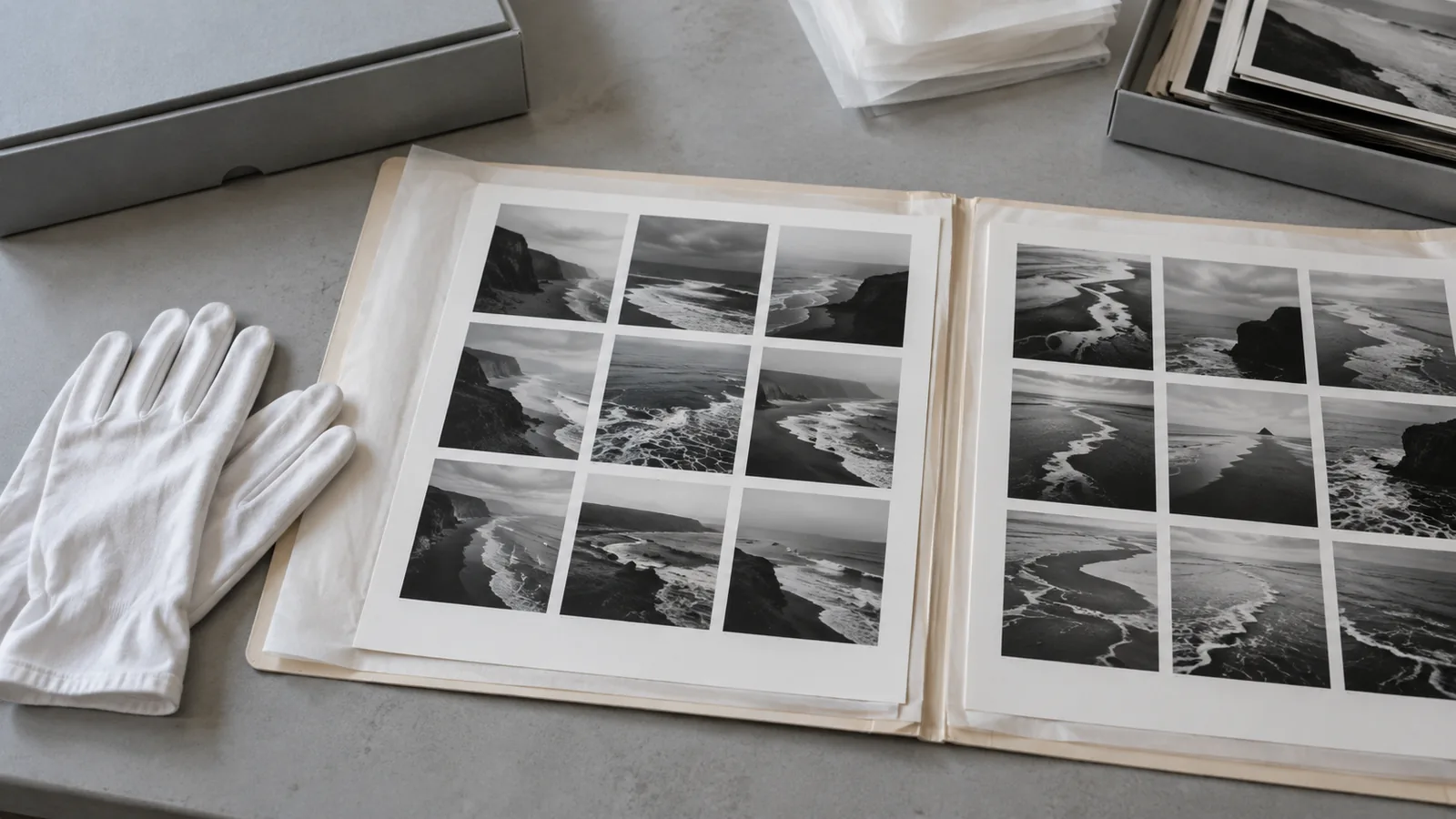
For a hypothetical travel essay, imagine finding an attractive coastline picture on a collection page. Before using it, identify which asset you mean, where its licensing information appears and whether the statement applies to the file you intend to download. A licence attached to the website as a whole may not describe every image within it. Read the relevant notices rather than extending one label to everything nearby.
If you cannot identify a sufficient basis for the intended use, the practical options include asking the relevant rights holder, choosing another asset or producing your own suitable image. Guessing because the file has circulated widely does not close the gap. Nor does copying a credit line from another publication prove that its use or yours is permitted.
The letters after CC change the decision
The CC BY 4.0 deed summarises permission to share and adapt, including commercially, subject to its terms. Those terms include appropriate credit, a licence link and an indication of changes, without suggesting endorsement. The deed also points readers to the full legal code; the short description should not be mistaken for the entire licence.
That is a specific licence, not a definition of every work described as open. For comparison, the CC BY-NC 4.0 deed includes a noncommercial condition. The difference matters before you decide whether an image suits a project. Reading only the familiar first two letters and ignoring the rest defeats the purpose of having differentiated permissions.
Do not settle a difficult use question with an invented universal rule such as every website with advertising is automatically acceptable or automatically forbidden. The intended use and applicable terms need examination. If your project depends on an uncertain interpretation, obtaining suitable permission or choosing an asset with clearer compatibility may be more practical than building the project around that uncertainty.
Version numbers matter too. Record the licence actually attached to the asset rather than substituting the newest version you recognise. A reusable credit template is helpful only if it preserves the correct information. Automatically labelling every image CC BY 4.0 because that is what your template says creates an inaccurate record, even if the mistake looks tidy on the page.
Attribution should help a reader follow the trail
A useful credit connects the published image to the creator, the source and the relevant permission statement. Think about whether a reader could follow that connection without guessing which asset or licence you mean. A name with no context may be inadequate for that purpose; a vague phrase such as image from the internet is almost useless.
In a hypothetical article using a properly licensed photograph, the working record can hold the creator information supplied with the asset, its source URL, the exact licence and the modifications made for publication. The public credit should be prepared from the actual terms and supplied notices. This is more reliable than trying to reconstruct everything after the crop has been exported and the browser tabs have closed.
Do not invent a creator’s name or a title to make the credit look complete. If information is missing, investigate or describe the record accurately. Similarly, do not attach a publisher’s name in a way that makes it appear to have commissioned the image when it did not. A credit is part of the publication’s factual account, not a decorative footer.
Placement also deserves thought. Credits should remain understandable in the formats where the image appears. If the same asset is used in an article and a newsletter, inspect both outputs. A credit that exists only in a draft note does not help the reader of the final email. The appropriate implementation depends on the licence and format, so check the result rather than assuming the template handles it.
Cropping is an editorial action, not just a layout setting
Creators often need to resize or crop an image for a card or a narrow email column. Before adapting an asset, check whether the applicable permission supports what you intend to do and what must be stated about changes. Do not assume that every licence grants the same adaptation rights. The fact that a publishing tool offers a crop control does not answer a rights question.
Even where an edit is permitted, consider what it does to the picture’s meaning. A hypothetical photograph of a public square might include a sign that explains the event. Removing that sign could make a different caption seem plausible. Permission to modify an image does not make every editorial interpretation responsible. Rights clearance and accuracy remain separate duties.
Keep the source file and identify the derivative used in the article. If a later question arises about whether an element was removed, the versions should be easy to compare. This is not a recommendation to build an elaborate archive for every thumbnail. It is a recommendation not to lose the relationship between the asset you obtained and the image you published.
A simple modification note can be prepared when the work is edited, while the change is still easy to describe. Avoid claiming that an image is unaltered if you have changed it. Equally, do not use a dramatic warning for an ordinary adjustment when a precise description would communicate the relevant fact. The wording should help the reader understand the version, not perform concern without information.
The photographer may not control every right in the scene
Creative Commons’ frequently asked questions explain limits involving third-party rights, including privacy and publicity interests. A copyright licence does not necessarily provide every permission an intended use may need. This is one reason a licence label should not be treated as a complete clearance certificate for any context.
Consider a hypothetical picture featuring an identifiable person. Using it to illustrate a neutral account of a place raises different editorial questions from placing it beside a headline that implies the person has a particular problem or supports a product. The image file is the same, but the publication’s message changes. The surrounding words can create an implication the creator of the photograph did not supply.
For a sensitive subject, ask whether the image could misrepresent the person or situation pictured. If the answer is uncertain, a generic illustration or another visual approach may serve the article better. This is not a claim that one rule resolves every jurisdiction or every use. It is an editorial reason to examine the actual context instead of treating a copyright notice as the end of the conversation.
The same separation applies to endorsement. Crediting a photographer does not mean they recommend your product or agree with your argument. Avoid layout and wording that imply such a relationship without evidence. A small publication can create that impression just as easily as a large campaign, especially when a portrait is placed next to a strong commercial statement.
Build a record that survives the next redesign
An image may remain on a site long after the person who selected it has forgotten the search. When the theme changes or a newsletter is republished, the original licensing context can disappear from view. A modest asset record makes it easier to retain the relevant facts rather than guessing later why a file was in the media folder.
The record can identify the source, access date, licence statement, supplied notices, intended use and the published derivative. Retain the relevant evidence in a way appropriate to the project. A screenshot or saved note can support your internal history, but it does not by itself prove that an uploader had authority. Documentation helps you explain a decision; it cannot turn a weak basis into a valid permission.
In a hypothetical two-person team, the writer chooses an asset and the editor prepares the layout. Both should be able to see the rights information before publication. Otherwise the editor may remove a credit as visual clutter without understanding its role, or the writer may assume that an unresolved question has been cleared by someone else. Shared responsibility works better when the unresolved points are explicit.
When reusing an old asset for a new purpose, revisit the record. An image selected for an informational article may later be proposed for an advertisement or product page. Do not assume that the earlier decision covers the new use. Identify what has changed and assess the relevant conditions again. The file’s presence in your library is evidence of previous possession, not a blanket permission for future projects.
When the evidence does not line up
Sometimes the source page, the downloaded file and a repost provide inconsistent information. Pause the intended use and identify the discrepancy. It may be an innocent labelling issue or something more substantial; you do not need to decide the cause immediately to recognise that the publishing basis is unclear. Ask a precise question rather than smoothing over conflicting labels.
If an image has already been published and a credible concern arises, preserve the relevant record and examine the actual claim. Correcting a credit, replacing an asset and responding to a rights complaint are different actions. Do not promise that any one of them automatically resolves every issue. The response should fit the facts and the applicable terms, with qualified advice where a specific legal dispute requires it.
Good image sourcing is less about finding a reassuring badge than about maintaining a clear chain of reasoning. You found this asset, identified this permission and chose this use on that basis. A credit helps communicate part of that chain. It works best when there is a real permission behind it and an editorial context that does not ask the picture to say something unsupported.